

Dehumidification, heating and heat recovery for energy-efficient spray drying
Climate fluctuations make spray drying unpredictable
Spray drying is a vital process across food, pharmaceutical, and industrial applications, enabling manufacturers to meet tight product specifications and maintain consistent product quality. However, seasonal variability and uncontrolled ambient humidity can introduce operational instability and quality inconsistencies.
High moisture in the intake air adds excess water to the process airstream entering the spray dryer, increasing the risk of powder sticking. This can lead to reduced production throughput, inconsistent bulk density, and increased reject levels, while also causing equipment fouling and unplanned downtime that results in higher maintenance costs.
Excess humidity further creates favorable conditions for microbial growth, and combustion gases from direct-fired systems can contaminate the process air, putting product safety and regulatory compliance at risk.
Because spray drying is inherently energy intensive, inefficient air treatment significantly increases energy demand and operating expenses. Without effective climate control, manufacturers experience variable product quality, more frequent cleaning cycles, and lower overall process reliability and productivity.
Without proper climate control, you risk:
- Reduced spray drying capacity and unpredictable product yields, including inconsistent bulk density and high reject rates
- Equipment fouling, powder clumping, and unplanned downtime that leads to major maintenance expenses
- High energy usage that drives up operating costs and increases your carbon footprint
- Microbial contamination that jeopardizes product safety and regulatory compliance

Our precision-engineered air treatment solutions ensure seamless and predictable spray drying process, regardless of weather conditions, to further maximize throughput and enhance product quality while reducing energy consumption and CO2 emissions.
Marcel van den Berghe, Business Development Spray Drying Lead
Munters
Why dehumidification and climate control are critical in spray drying systems
Without proper climate control, a spray drying line cannot operate at peak performance year round, which directly affects product quality and overall profitability.
Effective regulation of air humidity and temperature is key to achieving high spray drying efficiency, while ensuring stable, optimized drying performance year‑round. This supports consistent production, lower energy consumption, and enhanced process reliability.
An integrated approach that combines desiccant dehumidification, high efficiency indirect air heating, and heat recovery technology ensures stable, 24/7 operation, regardless of season or climate, while minimizing energy consumption.
Effects of precision-engineered air treatment:
- Consistent year-round reliability with maximized throughput and predictable product volume yields
- Stable drying conditions minimizing weather-related disruptions and preventing powder lumping and equipment fouling
- Energy efficiency significantly lowering fuel costs and CO₂ emissions for each ton of powder produced
- Reduced Clean-In-Place (CIP) time and frequency enhancing uptime and long-term performance

Superior product quality
Munters air treatment solutions create a controlled, low-humidity environment that prevents powder from lumping, clumping, or spoiling during spray drying. This ensures powders maintain the intended moisture content and particle characteristics, delivering uniform bulk density and minimal rejections.
By reducing risks of scorching from overheating and spoilage from excess moisture, our systems safeguard product integrity and compliance with strict sanitary standards.
Consistently dry, clean air improves shelf life, reduces contamination risks, and shortens CIP cycles—resulting in higher-quality products and greater process reliability.

Benefits of indirect heating
Indirect-fired recirculating gas heaters provide clean, contaminant-free process air by isolating combustion gases, eliminating contact with hazardous by-products such as nitrites and nitrates during the process. This design minimizes dust ignition risks, supports FSMA compliance, and meets stringent food safety and GMP standards.
Operating at up to 98% efficiency, these heaters deliver stable thermal performance for energy-efficient spray drying while reducing emissions and fuel consumption. The result is a safer, more sustainable process that protects product quality, lowers operating costs, and ensures reliable performance under all conditions.

Control climate fluctuations. Munters air treatment solutions for predictable spray drying.
An integrated approach combining desiccant dehumidification, high-efficiency indirect air heating, and heat recovery technology ensures consistent, round-the-clock operation regardless of season or climate. Read more about Munters spray drying solutions.
Download the brochure

Optimize your system with Munters online spray drying calculator
Munters Spray drying calculator is designed to optimize your spray drying operation. Adjust parameters like utilities, climate zone, heating source, and dry solids to see real-time insights on capacity, energy use, CO₂ reduction, and cost savings for maximum ROI.
Try the calculator
Customers using Munters solutions for spray drying applications
A leading infant formula manufacturer in the Netherlands partnered with Munters to implement a comprehensive air treatment solution tailored for high-demand spray drying operations.
An integrated system combining PureSystem, VariMax IFRG, PureHP, PureSound, PureRecup, and a heat pump ensured precise control of air humidity and temperature under varying seasonal conditions. The approach also incorporated heat recovery and energy optimization technologies to minimize fuel usage and environmental impact.
By implementing Munters air treatment solutions, the customer achieved year-round reliability, improved sustainability, and a fast return on investment—all while safeguarding the quality and safety of infant formula products.
Left image - Solutions provided: PureSystem, VariMax IFRG, PureHP, PureSound, PureRecup and Heat pump

Based in Zwolle, the Netherlands, Sensus uses the chicory root to produce inulin, a sweetener used in the food industry, utilizing a spray drying process to convert the concentrated inulin solution to powder.
One of the most critical factors in the spray drying process is climate variability, as temperature and moisture levels directly influence product glutinosity, potentially leading to fouling and production downtime.
The Munters PureSystem Premium Plus 3500 with the patented HPQ Quantum desiccant rotor optimizes Sensus spray drying process with perfect inulin moisture content.
With our proven technology, climate is no longer a variable but a constant factor, and spray drying production capacity has increased by 40%.

Products for spray drying applications
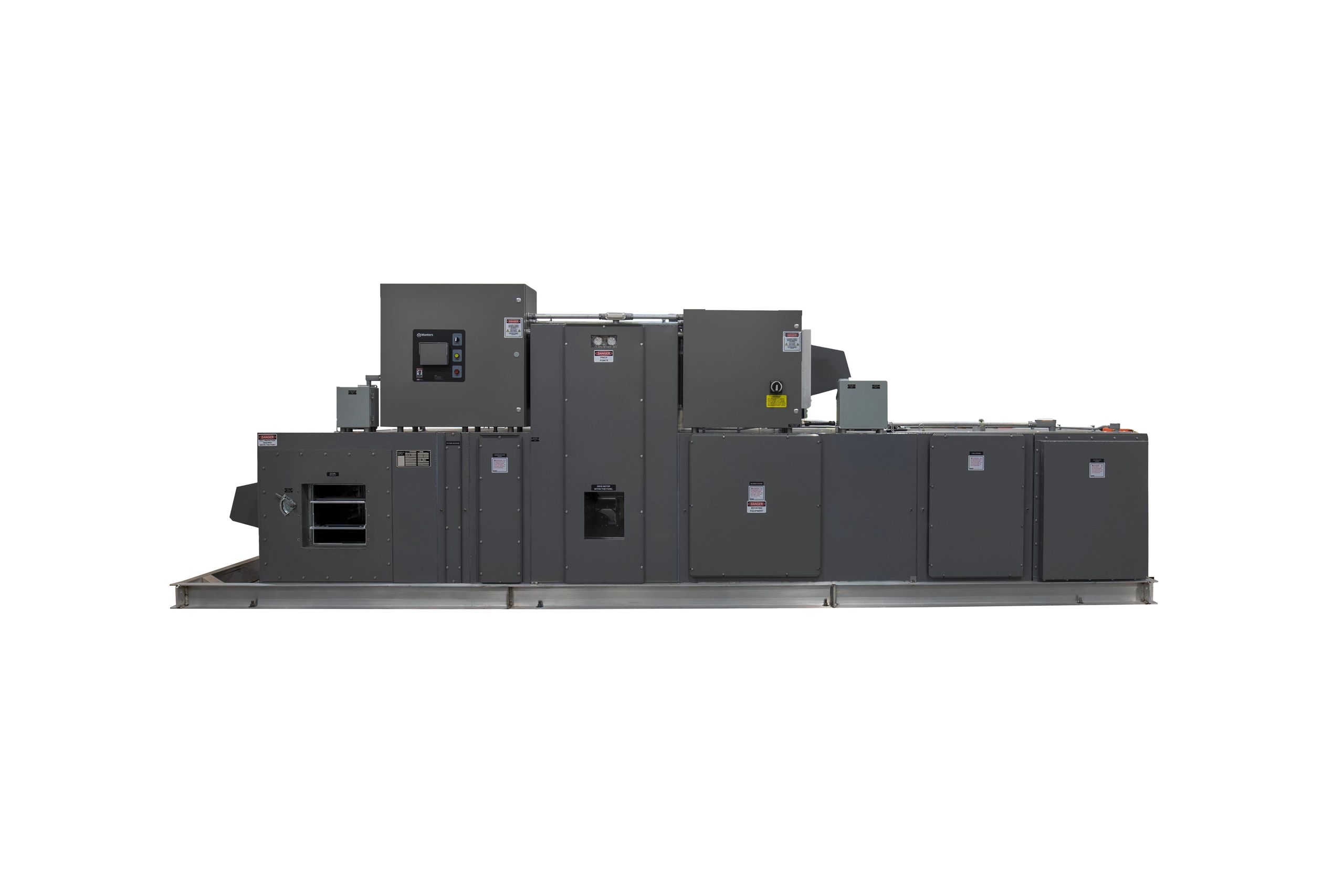


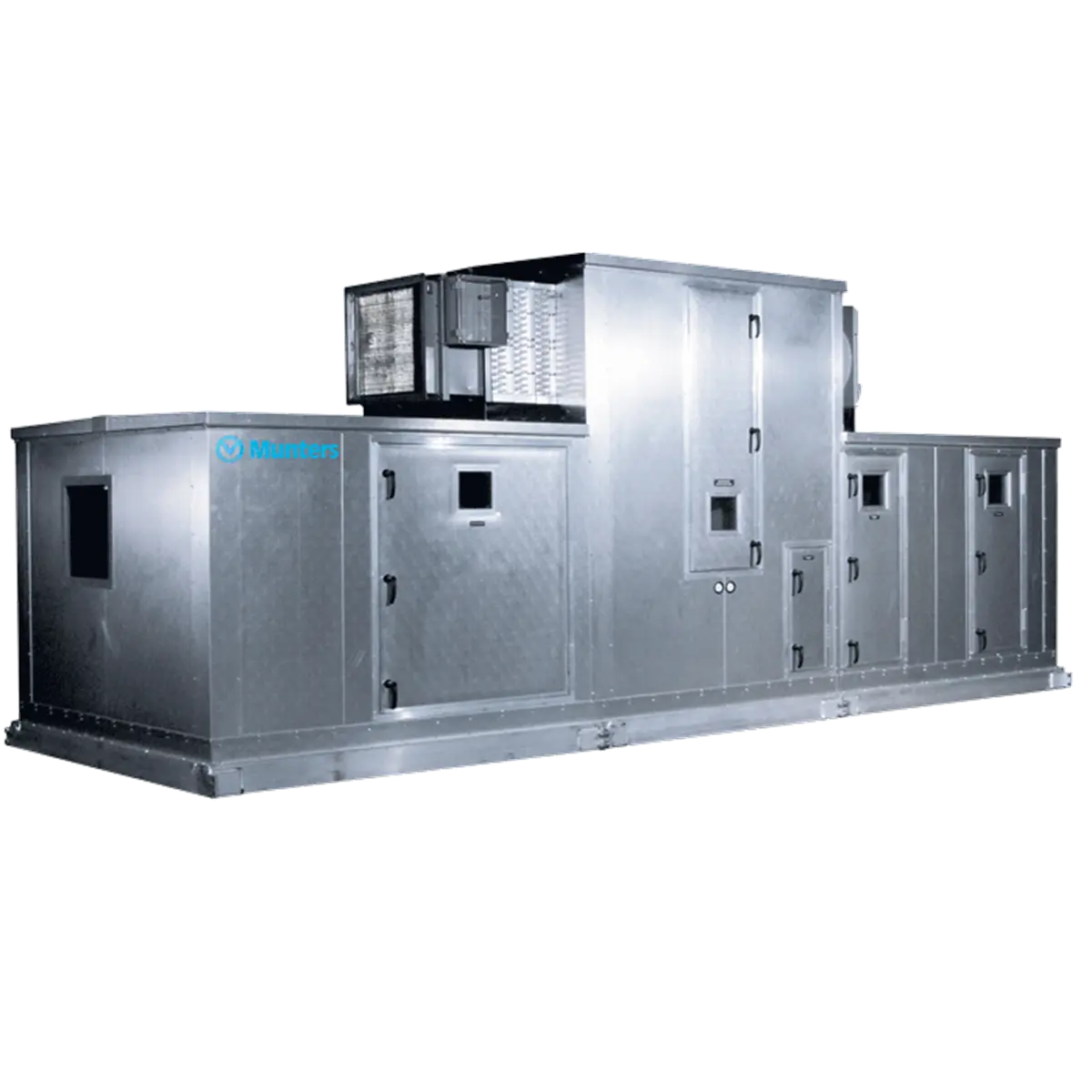

Spray drying applications in food, pharmaceutical and industrial systems
Spray drying in food production faces humidity-driven challenges like powder lumping, clogging, and microbial risks in products such as infant formula, cheese, coffee, dairy, and whey protein.
Seasonal fluctuations often force slower feed rates, reducing throughput, and raising energy costs. By integrating desiccant dehumidifiers with energy‑efficient indirect air heaters and heat recovery, Munters delivers stable conditions year-round. This solution boosts capacity by up to 40%, cuts energy use by up to 40%, and ensures superior powder quality with minimal fouling.
Reduced CIP cycles, lower CO₂ emissions, and fast ROI make it a sustainable, high-performance choice for food manufacturers.

The pharmaceutical industry demands precise control to maintain powder integrity for lactose, maltodextrin, proteins, and infant formula in the spray drying process. High ambient moisture can cause fouling and frequent downtimes, leading to inconsistent particle size, contamination risks, and impacting compliance and efficiency.
Munters combines desiccant dehumidification, indirect high‑efficiency air heating, and heat recovery into a single, integrated approach that creates predictable drying conditions regardless of climate.
Benefits include up to 40% higher throughput, 15-40% energy savings, and superior product uniformity. Hygienic stainless-steel design meets GMP standards, while reduced cleaning downtime and lower emissions support sustainability. With rapid ROI, this system ensures reliable, cost-effective pharmaceutical production.

Spray drying for chemicals and fertilizers, such as battery-grade powders and detergents, faces challenges from moisture-induced clumping, corrosion, and equipment blockages, leading to costly downtime.
Munters integrated solution combines desiccant dehumidifiers with high-efficiency indirect air heaters and heat recovery to ensure consistent performance in any climate. Operators achieve up to 40% increased capacity, significant fuel savings, and reduced maintenance thanks to minimized fouling.
With superior thermal efficiency, lower CO₂ emissions, and fast ROI, Munters ensures sustainable, reliable production for chemical and fertilizer manufacturers.

Frequently Asked Questions for Spray drying
Humidity changes the moisture load in the process air, directly affecting the product drying rare. Inlet-air humidity materially affects powder recovery, moisture content, water activity and bulk density, making dry, conditioned inlet air the key to more stable spray-dryer performance even in changing weather conditions.
When the intake air carries too much moisture, powders take longer to dry and are more likely to stay sticky. That increases the risk of wall deposits, clumping, fouling, blockages, inconsistent bulk density and rejects. Condensation, corrosion and microbial risks lower yield and drive shutdowns and downtime.
Drier process air helps particles dry at the surface more quickly, reducing their likelihood of adhering to chamber walls or to one another. Lower inlet-air humidity improves powder drying because particles become surface-dry faster and are less likely to stick during collisions in the drying chamber. With a Munters dehumidification system, powder build-up is minimised, and CIP time and frequency are reduced.
Because spray drying is not only a humidity-control job, it is also a clean-heating job. Our indirect-fired heaters keep combustion gases separate from the process air and are used in spray drying for sensitive food, chemical and pharmaceutical products, without adding humidity to the supply air. Indirect-fired air heaters are typically used for food, dairy and pharmaceutical products.
Heat recovery captures energy that would otherwise be lost in hot exhaust gases and reuses it, typically by preheating the process air. Munters’ high-temperature heat recovery systems recover 60–80% of flue gas waste heat, which is used to preheat combustion air.
Munters’ dehumidification systems are not only about output; they are also about controlled, hygienic air handling. PureSystem, for example, is built for spray drying in food, chemical and pharmaceutical environments and uses stainless-steel construction, food-grade filters and options such as regeneration heat recovery. PureHP is aimed at hygienic high-care areas, follows EHEDG food-safe design principles, and uses materials compliant with FDA and EC 1935/2004.
Want to learn more about humidity control for spray drying applications?