

Humidity control in fish and seafood processing
Uncontrolled humidity puts your fish and shellfish at risk
Fish handling and processing demand strict hygiene and precision to comply with food safety and HACCP regulations. Frequent washdowns add significant moisture that manual drying rarely eliminates completely. Condensation and residual dampness on surfaces, structures, and equipment create ideal conditions for microbial growth and increase contamination risk.
In live seafood displays, high humidity causes condensation on cold glass surfaces. This reduces visibility, complicates daily inspections, and makes the catch less appealing to customers.
Cold storage areas for seafood and fish are particularly vulnerable. When warm, humid air enters the cold room; condensation forms rapidly, leading to ice and frost buildup. This can create slippery floors, obstruct forklift movement, reduce barcode readability, and impair evaporator performance.
In seafood production aa well as fish processing and packaging, precision, hygiene and quality are all important to ensure food safety and minimize product waste. Uncontrolled humidity is not just an inconvenience, but it is a direct threat to food safety, operational reliability, and a safe working environment.
With uncontrolled humidity you risk:
- Condensation after cleaning, increasing the risk for bacterial growth
- Reduced efficiency and unnecessary production stops
- Ice and frost in the cold room, increasing energy consumption
- Fog and reduced visibility for customers and workers
- Non compliance with HACCP regulations
"We relied exclusively on Munters because we knew they were unquestionably the best. Munters’ dehumidifiers help maintain optimal processing and storage conditions. Our situation has improved considerably, allowing us to offer a much better final product."
Diego Ledda, Technical Area Manager
Fiorital S.p.A.
Live, processed, or frozen fish?
Although water is fundamental to the fishing industry, excessive humidity poses a serious challenge during live holding, frozen storage, and seafood or fish processing.

Humidity challenges in fish processing plants
Fish processing plants face strict hygiene requirements to ensure high product quality and maintain food safety. Large volumes of water are used during daily sanitation cycles, leaving behind moisture that condenses on surfaces and creates risks of bacterial growth, contamination, and operational downtime.
Want to talk with an expert?

Preventing condensation in seafood cold storage
When humid air enters a seafood cold room, frost and ice quickly form on floors, shelves, evaporators, and on the fish or seafood stored. This will impair barcode scanning, forklift operation, and even the safety of the workers. As a result, energy consumption increases, defrost cycles become more frequent, and operational risks escalate.
More information on cold storage
Reducing condensation on live fish tanks
Live fish and shellfish are often stored in onshore holding tanks at the harbor or in water tanks inside retail shops. These environments naturally experience high humidity levels, especially around cold glass surfaces. When warm, moist air meets the cooler tank glass, condensation forms — reducing visibility for staff monitoring live seafood and for customers selecting products.
Want to talk with an expert?
Energy-efficient dehumidification fish processing and seafood production
Ensuring quality and safety in the fish-handling process involves a delicate balance of precision and care. Industrial desiccant dehumidification is a well-proven solution for providing stable relative humidity in the seafood plants and cold rooms, thereby minimizing water vapor and condensation to reduce the dew point. Keeping relative humidity in the 40-60% range inhibits all microbial and mold growth and reduces virus transmission.
- Year-round, precise humidity and moisture control
- Maintain industry standards and regulatory compliance, such as HACCP
- Reduce the risk of mold or bacteria growth
- Reduce product spoilage and waste
Based on decades of expertise working with fish and seafood processors globally, Munters range of industrial dehumidification systems can be customized to suit the specific needs of your seafood production facility, whether the shellfish or fish is live, processed, or frozen.
Desiccant dehumidifiers for the seafood industry
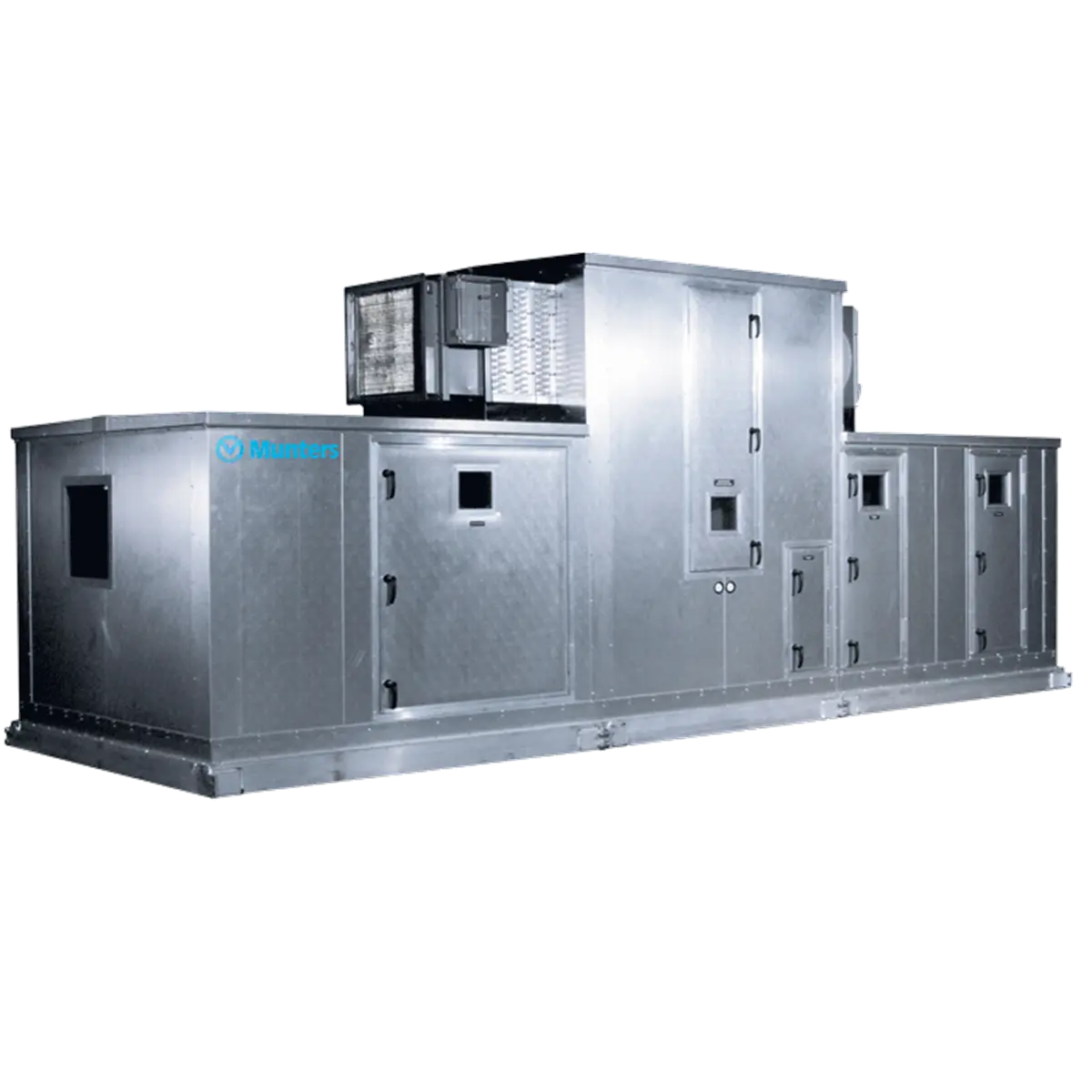
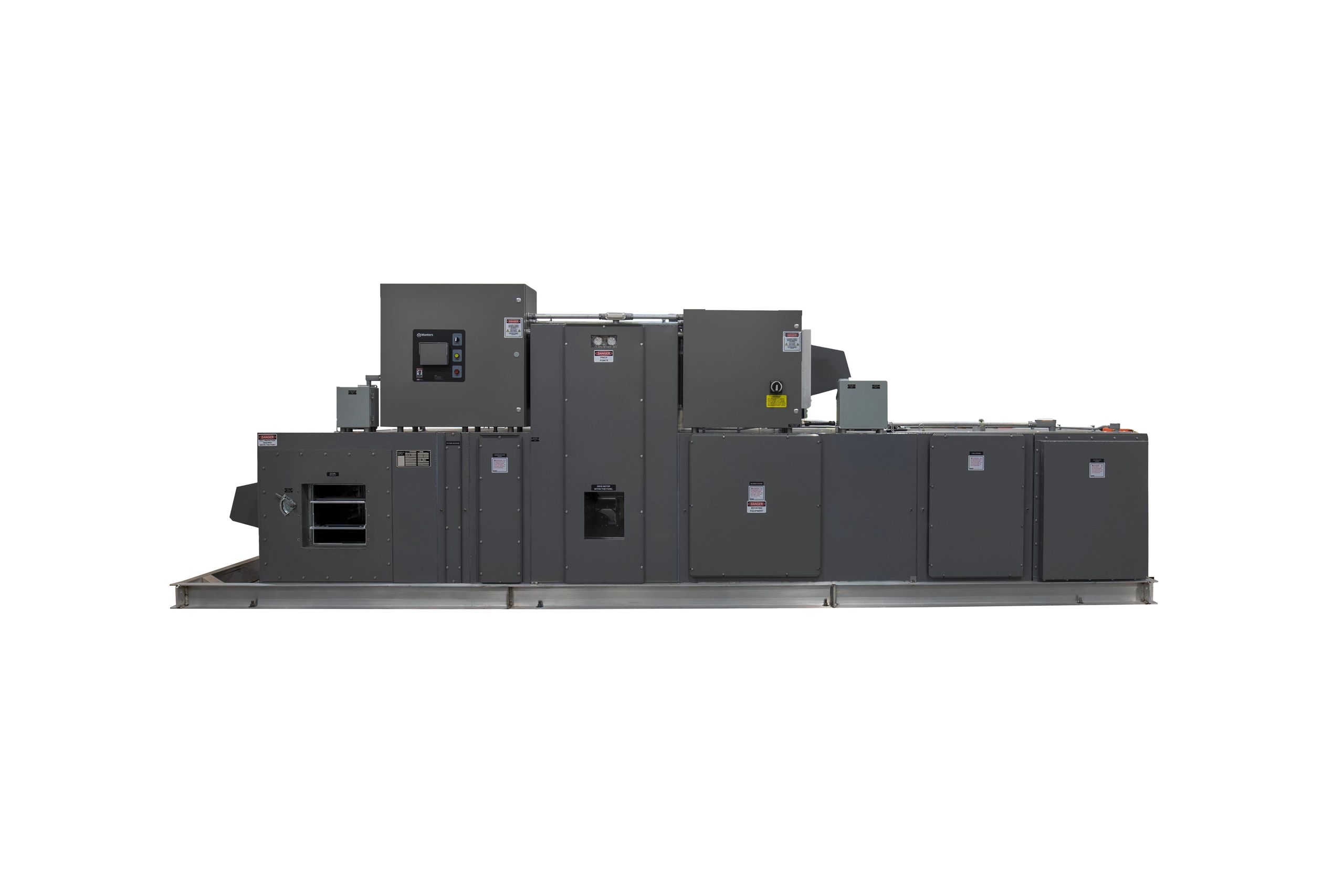
Munters’ ICA desiccant dehumidifier
For large fish processing plants, the Munters ICA desiccant dehumidifier is your solution to avoid moisture and condensation issues. This highly customizable system is available in many sizes and configurations that can be engineered to meet your needs.
The ICA offers energy-efficient humidity control and features double metal walls and a no-through metal design to prevent condensation. It can be integrated with your existing HVAC system and configured to include cooling capabilities.

Munters’ IceDry 1400 for energy-efficient cold storage
A cold store shouldn’t have ice or frost. Energy consumption will increase, the products and packaging may be affected, and the workers’ safety are at risk. The Munters IceDry 1400 AirC was designed specifically to remove moisture in cold storage facilities, refrigerated warehouses, walk-in coolers, and freezers. The IceDry works by removing moisture at the source – from the air in your cold storage, or infiltrating air at docks and anterooms.
The Munters IceDry offers industry-leading performance and energy efficiency in a stand-alone system that can be installed directly inside your cold storage. The system can operate independently in smaller cold rooms, or multiple units can be installed to protect larger warehouses.
Products for fish and seafood processing plants


Munters Service to avoid unplanned downtime
Unplanned process downtime can be very costly. Ensuring that your desiccant dehumidifier is operating at its peak is critical to keeping your process operating efficiently, ensuring high-quality fish and shellfish.
Munters' equipment is backed by our world-leading service team. They are directly employed by Munters, with decades of experience in maintaining climate control systems. With a Munters Service Agreement you can extend your dehumidification system's life, increase energy efficiency, and minimize downtime.
Frequently Asked Questions about seafood and fish processing
In seafood facilities, humidity spikes because of constant water use (washdowns, rinsing, glazing), plus temperature differences between cold rooms, chilled process areas, and warmer incoming air. When moist air hits cold surfaces, it can turn to fog and condensation. That matters because condensation can lead to damp surfaces where microbes grow, slippery floors and foggy working conditions. Also, when moisture accumulates or drips onto food-contact areas, it becomes a hygiene risk.
Condensation control is a very practical part of protecting from contamination risk. Avoiding condensation is vital for food safety in fish processing, making dehumidification a key tool to maintain stable conditions and support regulatory standards such as HACCP. External guidance also supports the underlying risk: Food Standards Scotland notes that condensation commonly forms on cold room ceilings and that many bacteria, including L. monocytogenes, grow readily in moist conditions.
Yes. Dry air distribution reduces condensation potential and significantly reduces sanitation dry out time, which helps plants get back into production faster. Manual ceiling and surface cleaning isn’t usually enough to meet strict condensation-control requirements – condensation often returns immediately when production is restarted. By installing a Munters system, facilities can be dry in around 1.5 hours after cleaning, depending on the application and size of the plant.
It tackles the root cause: moisture getting into cold spaces, then freezing where you least want it. Washdowns, combined with low ambient temperatures, can drive condensation and ice build-up on cold surfaces in production and storage areas. The impact includes slippery surfaces (safety), ice accumulation (obstructing airflow, stopping forklifts and making barcode reading more difficult), reduced cooling-coil efficiency, and contamination risk from condensation drip.
Humid air can cause fog and reduce visibility, which makes the product less attractive to customers. With dehumidification, the air is no longer humid, meaning condensation will not form on the glass, and the catch is fully visible.
Desiccant dehumidifiers are a popular choice because they offer precise humidity control at any required dew point and reliable performance in all environments, with strong energy efficiency. What’s more, the Munters’ desiccant rotor is the standard for high-performance industrial dehumidifiers, adsorbing more water and performing more consistently than competitor solutions.